Thought Leadership-Newsroom
Ask Us Anything: Caring for Yourself While Caring for Someone with Dementia During the Holidays
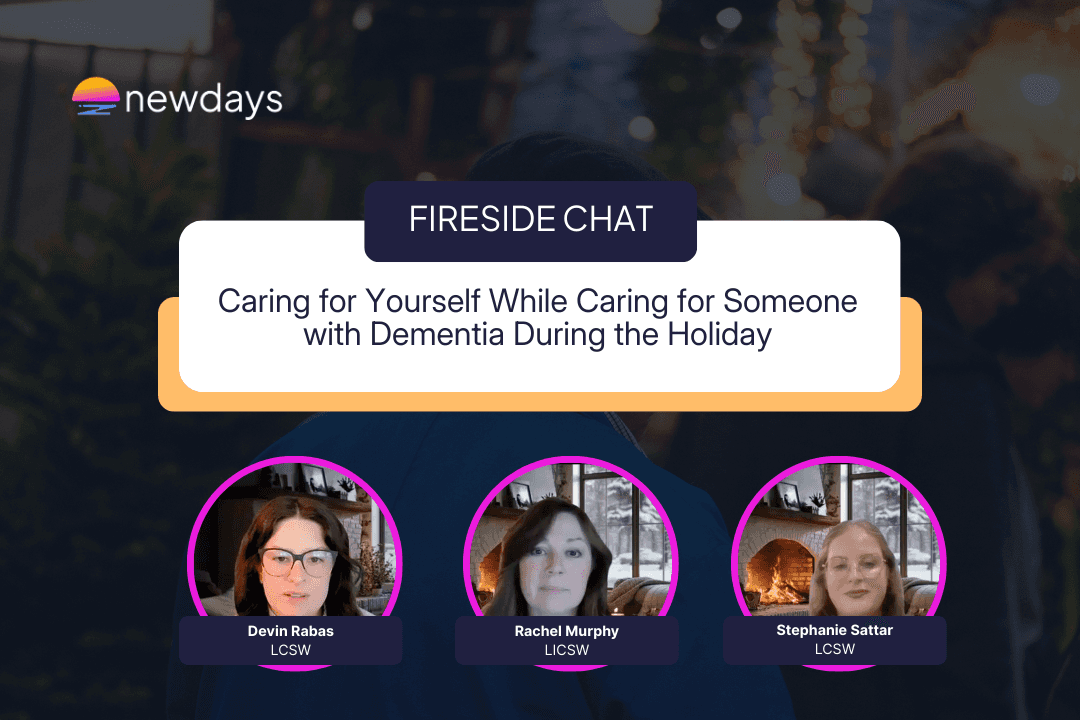
Devin Rabas, LCSW, Stephanie Sattar, LCSW and Rachel Murphy, LICSW are cognitive health specialists and NewDays clinicians
Q: The holidays are a really stressful time for me as I prepare to host friends and family while supporting my husband who is living with dementia. I need help!
Welcome to our fireside chat: Caring for Yourself While Caring for Someone with Dementia During the Holidays
Hello, I’m Devin, and I’m here with my colleagues Stephanie and Rachel. We’re all clinicians at NewDays, and we’re really glad to spend this time with you. Today, we’re looking forward to talking about how you can care for yourself during the holiday season—especially when you’re also caring for someone else. Our hope is to offer support, share helpful perspectives, and remind you that you don’t have to navigate this time alone.
Devin
Welcome everyone, and thank you for taking the time to join this conversation. The holidays can be a complicated time for caregivers — a season that’s supposed to be joyful can also bring exhaustion, guilt, and even grief. Today, we want to talk honestly about what it means to practice self-care during the holidays when you’re caring for someone living with dementia.
Rachel
Yes, and I love that you said honestly, Devin — because the truth is, “self-care” can feel impossible when your day is already full of medications, meals, and juggling competing responsibilities. Caregivers often tell me they feel selfish for wanting time for themselves. But self-care isn’t indulgent — it’s maintenance. You can’t pour from an empty cup.
Stephanie
That’s so true. Many caregivers are running on fumes by December — juggling appointments, family expectations, maybe even work. And then the holidays arrive with their bright lights, loud music, and emotional weight. Those things can be overwhelming for your loved one and for you. So part of self-care is lowering the bar — allowing things to be simpler, quieter, and different.
Devin
Exactly. Sometimes that means giving yourself permission to create new traditions that fit where your family is now. Instead of a big holiday dinner, maybe it’s an afternoon tea with a few close friends. Instead of decorating the whole house, maybe you put up one or two comforting items your loved one recognizes — a favorite ornament, a soft blanket, a scent they love.
Rachel
That’s a beautiful image — keeping what feels familiar and letting go of what doesn’t serve you anymore. I often tell families: connection matters more than tradition. What your loved one will feel isn’t the elaborate setup — it’s the sense of calm, the company of familiar faces, the safety of being with you.
Stephanie
Yes, and for the caregiver, that calm begins with setting boundaries. The holidays tend to bring outside opinions — relatives who haven’t seen your loved one in a while might not understand the changes dementia brings. They might question your decisions or pressure you to do things “the old way.” It’s okay to gently say, “This year looks a little different for us.” Protecting your peace is part of caring well.
Devin
Boundaries are such a gift to yourself — and to everyone else. They keep expectations realistic and prevent resentment from building. It can also help to plan your day in advance: what’s non-negotiable, what can flex, and where you’ll pause. Even small rituals — like having your morning coffee alone before the day begins — can become an anchor.
Rachel
And when it comes to support, I always remind caregivers: you’re not meant to do this alone. Even if family can’t provide hands-on help, maybe someone can handle a grocery pickup, sit with your loved one for an hour, or organize holiday cards. Ask specifically. People often want to help — they just need direction.
Stephanie
Yes, that’s a great point. And if you don’t have family nearby, think creatively about your support network. Maybe it’s a neighbor, your church community, or a local respite program. Taking even a small break — a walk, a nap, a phone call with a friend — helps your nervous system reset.
Devin:
I also want to talk about something we don’t always name: grief. The holidays can bring up powerful memories — who your loved one used to be, how your family used to celebrate. Grief doesn’t just happen when someone passes away; it happens as we lose pieces of them over time. It’s okay to feel sadness, anger, or even guilt for missing the past.
Rachel:
That’s so important. Grief can show up as irritability, fatigue, or a sense of numbness. Many caregivers think, “What’s wrong with me? I should be more grateful.” But these feelings are normal. Let yourself feel them. Write them down, share them with a counselor, or bring them to a support group. Naming grief gives it less power.
Stephanie:
And remember, joy can still exist alongside grief. Sometimes caregivers feel guilty for enjoying themselves — for laughing at a movie or relaxing during a quiet moment. But those moments of lightness don’t mean you care any less. They’re part of what keeps you resilient.
Devin:
Yes. I often tell caregivers: your well-being is not separate from your loved one’s — it’s connected. When you’re rested, calmer, and supported, your patience grows. You can respond with compassion instead of frustration. That’s the true gift of self-care — it ripples outward.
Rachel:
And if you’re looking for small, realistic self-care ideas, try a few of these:
Keep a “caregiver corner” in your home — a chair, candle, or playlist that helps you unwind.
Practice saying “no” or “not this year” when something feels too heavy.
Set aside 10 minutes at night to stretch, pray, or just breathe.
Ask one trusted friend to check in on you, not just on your loved one.
Stephanie:
I love that list. I’d add one more: plan something kind for yourself after the holidays — maybe a quiet day, a small treat, or time outdoors. Caregiving doesn’t pause, but your energy can renew if you intentionally make space for it.
Devin:
That’s a wonderful reminder. Before we close, I’d like to invite everyone listening to take a slow breath. Think about one thing you can do this week — even something very small — that’s just for you. Maybe it’s calling a friend, listening to music, or stepping outside for five minutes of sunlight.
Rachel:
You deserve care, too. You’re doing meaningful, demanding, loving work — and you’re human. The holidays are not about perfection; they’re about being present in the moment.
Stephanie
And that includes your own presence with yourself — offering the same patience and kindness you give to your loved one.
Devin
Beautifully said. Thank you, Rachel and Stephanie — and thank you to everyone who shows up, day after day, for someone living with dementia. We see you, and we hope you’ll give yourself a little compassion this holiday season.
Have a question for our clinical team? Submit your cognitive health questions to hello@newdays.ai and it might be featured in our next Ask Alex post.
Next Article

Ready to get answers?
Schedule your free consultation with a NewDays clinician this week.
Available Monday-Friday via secure video call.