Thought Leadership-Newsroom
Ask Alex: What is Cognitive Rehabilitation Therapy
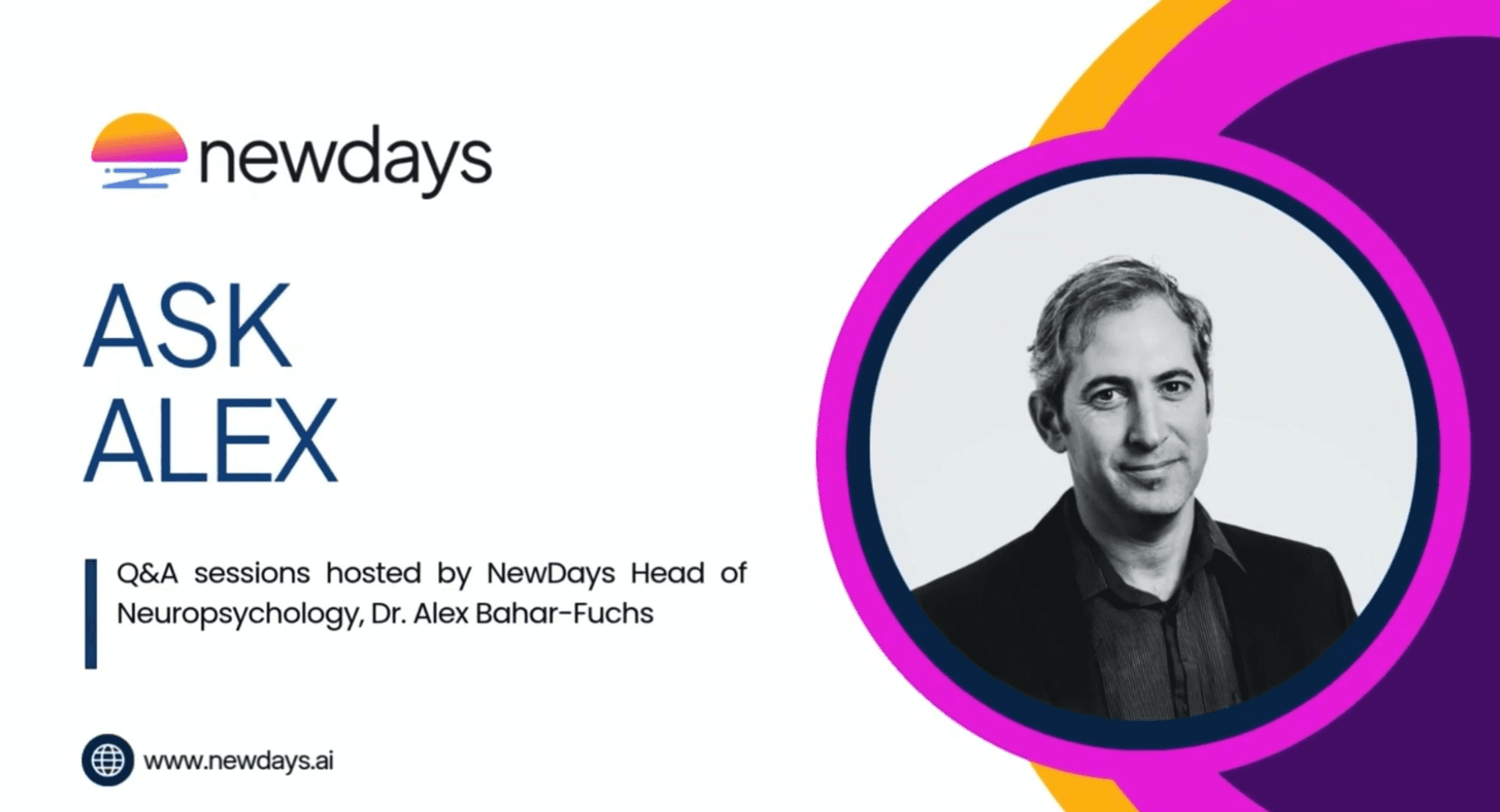
Dr. Alex Bahar-Fuchs is NewDays' Director of Neuropsychology and a leading expert in cognitive interventions for older adults.
Q: When I received my MCI diagnosis, my neurologist mentioned I could do "cognitive rehab" to help slow my symptoms from progressing, but she didn't explain what that is. Can you help?
Dr. Alex:
Cognitive rehabilitation therapy is a form of rehabilitation for people with cognitive problems who experience difficulty carrying out some of their daily tasks and activities. Problems with thinking such as memory, attention, speed, language and so on can make it harder for people to complete certain tasks and activities without some support.
Problems may include such things as planning and preparing meals, going shopping, socializing with friends, or managing finances, among many others. Unlike the case for people with certain types of brain injuries such as stroke, where their condition may improve over time, for older people with dementia due to neurodegenerative diseases, cognitive challenges will generally increase over time, and difficulties with daily activities may become more pronounced.
However, people with or at risk of dementia also have a range of remaining strengths. And cognitive rehabilitation specialists build on these strengths in supporting their clients while teaching them and those who support their care how to effectively use various strategies to support thinking processes.
Working collaboratively with clients and their support persons to set personally relevant and meaningful goals related to everyday activities is at the heart of cognitive rehabilitation. For example, for one person with dementia, a meaningful goal might be to be able to continue cooking simple meals for their partner two or three times per week. For another person with dementia, a meaningful goal might be to continue being able to catch up with a close friend for lunch every week.
Cognitive rehabilitation specialists will often help clients formulate goals that are SMART. In other words, they are specific, measurable, attainable, relevant, and time-limited. And then they will work together to identify the skills required to perform the goal, and to address a range of barriers that the person may be facing. For example, issues with their memory, their self-esteem, or their confidence, or even motivation.
Over several weeks, the therapist will work closely with their client and their support person to develop and work towards a plan of how to achieve their goal, and will practice with them performing the activity in question. High-quality studies exist that provide very strong evidence in support of cognitive rehabilitation, showing that people with dementia and their close others often rate their performance of the desired goal to be substantially improved through cognitive rehabilitation, with benefits often lasting several months.
Cognitive rehabilitation is at the heart of the treatment model at NewDays, and I invite you to read more on our website or contact us to find out more about how our skilled clinicians may help you.
Have a question for Dr. Alex? Submit your cognitive health questions to hello@newdays.ai and it might be featured in our next Ask Alex post.
Next Article
Ready to get answers?
Schedule your free consultation with a NewDays clinician this week.
Available Monday-Friday via secure video call.